















































































by Marika De Vincenzi
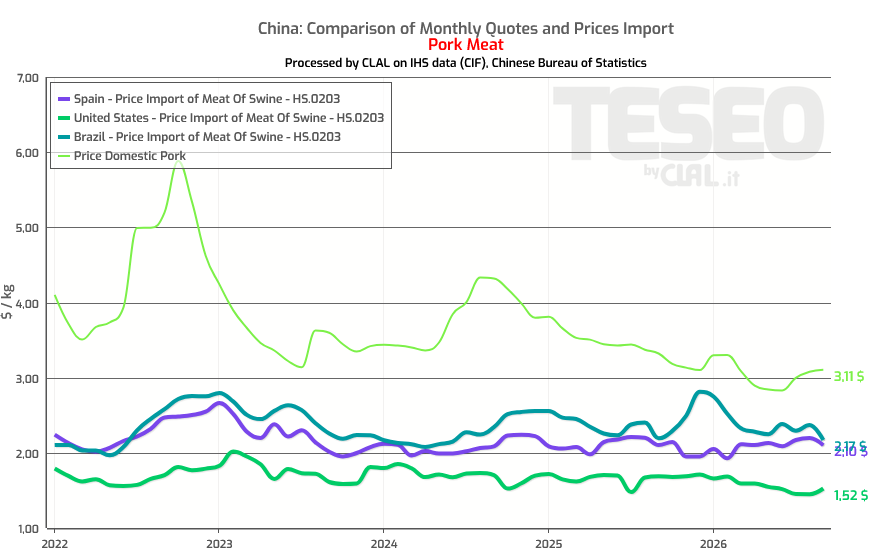
After years of production expansion, partly driven by efforts to recover from the African Swine Fever (ASF) crisis of 2018–2019, China’s pork market is now facing weaker domestic demand and prices under pressure.
According to the latest USDA estimates, pork consumption in China is expected to decline slightly in 2026 (-0.1%, a seemingly small change that still carries weight given the large volumes involved), reaching 60.35 million tonnes. In contrast, chicken meat consumption is forecast to increase by 7.2%, reaching 16.84 million tonnes.
Different trends are also emerging on the production side. China produced 59.4 million tonnes of pork in 2025, with a further 0.5% increase expected in 2026. Chicken meat production, which reached 16.5 million tonnes in 2025, is forecast to grow by 9.1% in 2026.
Meanwhile, new signals are emerging in international trade. Between January and September 2026, China exported nearly 158,000 tonnes of pork (exclusively to neighbouring Asian markets), up 24% compared with the same period in 2025 and as much as 91% compared with January–September 2023.
Although export volumes remain limited compared with those of the world’s leading pork exporters, this trend suggests a growing effort to find overseas outlets to absorb China’s substantial domestic production capacity. This is particularly significant considering that Chinese-produced pork is more expensive than competing imported products available on the Chinese market, including those from Brazil, the United States and Spain.