











































Meat consumption in Italy: beef prices accelerate, while other meat prices remain more stable
30 October 2026

by Marika De Vincenzi
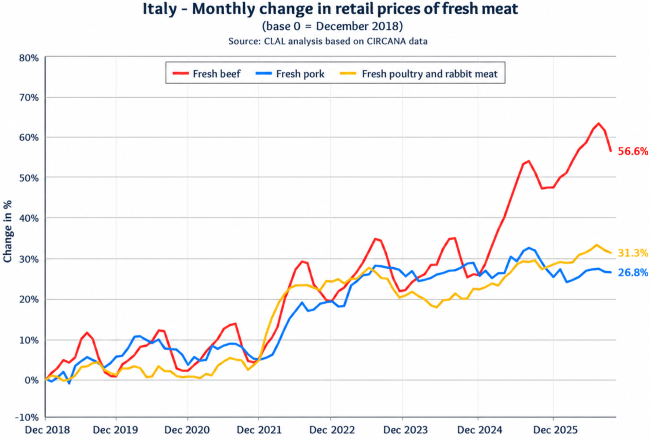
TESEO.clal.it – Monthly change in retail prices (base 0 = December 2018)

Retail consumption of fresh meat in Italy showed diverging trends in the first nine months of 2026. According to CLAL’s analysis of Circana data (covering hypermarkets, supermarkets, small supermarkets and specialist food retailers), purchases of fresh pork increased by 6.2% in volume, while those of beef declined by 6.2%. Poultry and rabbit meat consumption remained broadly stable (+0.2%).

Consumer price trends have undoubtedly contributed to this scenario. As shown in the chart, which illustrates changes in retail prices compared with December 2018, beef prices have risen sharply since late 2024, widening the gap with pork, poultry and rabbit meat, whose prices have remained relatively stable in recent years.

These dynamics highlight growing pressure on beef’s competitiveness compared with other types of meat, as declining household purchasing power increasingly influences consumer spending decisions.

The cured meat and cold cuts segment also shows diverging trends: in the first nine months of 2026, purchase volumes of cooked ham (Prosciutto Cotto) declined by 4.8% and mortadella by 4.7%, while dry-cured ham (Prosciutto Crudo) increased by 2.5%. Growth was particularly strong in the non-PDO segment (+4.1%), also supported by a 1.2% decrease in average prices in this category.
China: renewed momentum in Cereal imports
27 October 2026

by Elisa Donegatti

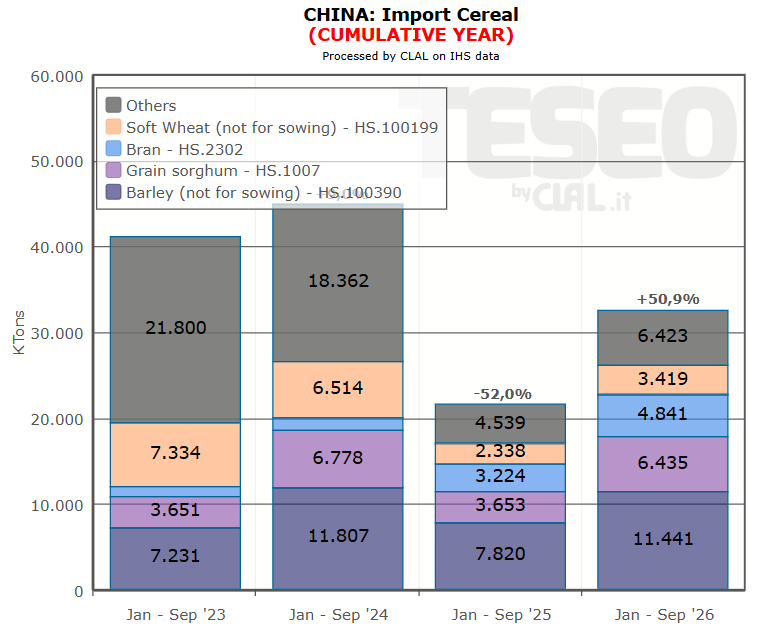
After slowing in 2025, China’s cereal imports have picked up pace, increasing by 50.9% in the January–September 2026 period. Imports of corn, which saw a 126% increase, as well as sorghum and barley, have been particularly robust. 

The recovery is mainly driven by rising domestic prices, also linked to quality issues affecting part of the Corn crop, as well as the greater price competitiveness of imported raw materials.

FAS-USDA estimates that the share of Corn used in animal feed in China fell from 47% in January to 29% in August 2026, in favour of other cereals such as Wheat, Barley and Sorghum, with Pig producers particularly focused on feed costs.

TESEO.clal.it – China: Cereal imports

China: shifting consumption patterns put increasing pressure on the Pork Market
23 October 2026

by Marika De Vincenzi

After years of production expansion, partly driven by efforts to recover from the African Swine Fever (ASF) crisis of 2018–2019, China’s pork market is now facing weaker domestic demand and prices under pressure.

According to the latest USDA estimates, pork consumption in China is expected to decline slightly in 2026 (-0.1%, a seemingly small change that still carries weight given the large volumes involved), reaching 60.35 million tonnes. In contrast, chicken meat consumption is forecast to increase by 7.2%, reaching 16.84 million tonnes.

Different trends are also emerging on the production side. China produced 59.4 million tonnes of pork in 2025, with a further 0.5% increase expected in 2026. Chicken meat production, which reached 16.5 million tonnes in 2025, is forecast to grow by 9.1% in 2026.

Meanwhile, new signals are emerging in international trade. Between January and September 2026, China exported nearly 158,000 tonnes of pork (exclusively to neighbouring Asian markets), up 24% compared with the same period in 2025 and as much as 91% compared with January–September 2023.

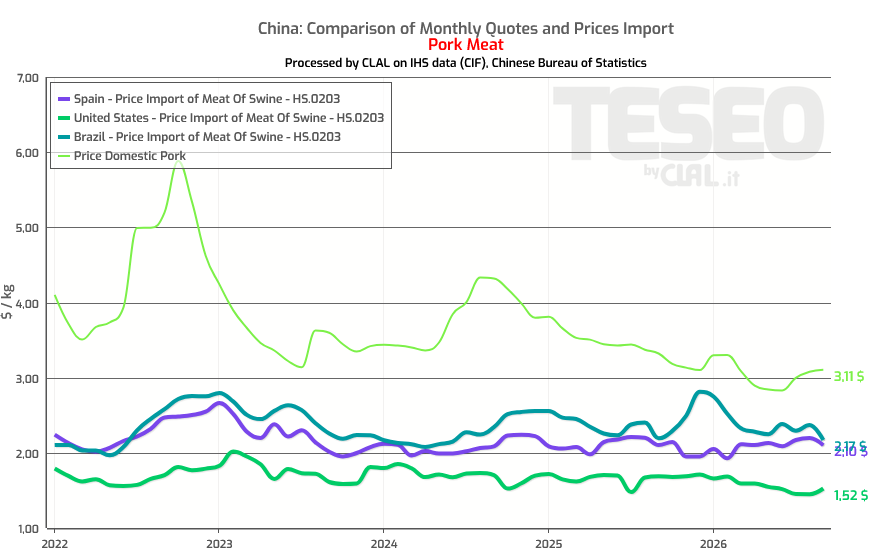
Although export volumes remain limited compared with those of the world’s leading pork exporters, this trend suggests a growing effort to find overseas outlets to absorb China’s substantial domestic production capacity. This is particularly significant considering that Chinese-produced pork is more expensive than competing imported products available on the Chinese market, including those from Brazil, the United States and Spain.

Triple Superphosphate: How Much Does the Price Increase Weigh on Crop Revenues?
20 October 2026

by Elisa Donegatti

46% Granular Triple Superphosphate is a Fertilizer that helps promote root development and support the early growth of crops. In Italy, autumn is a key period for fertilizer applications to winter-sown crops, while farmers also plan their Fertilizer purchases for the following spring’s corn crop. As a result, fertilizer costs are once again in focus. 

In Turin, Italy, prices have risen by €80/t in one month, reaching €725–735/t in early October. The increase is partly driven by geopolitical tensions in the Middle East, which are affecting maritime transport and the availability of raw materials such as sulphur, increasing costs and uncertainty over supplies.

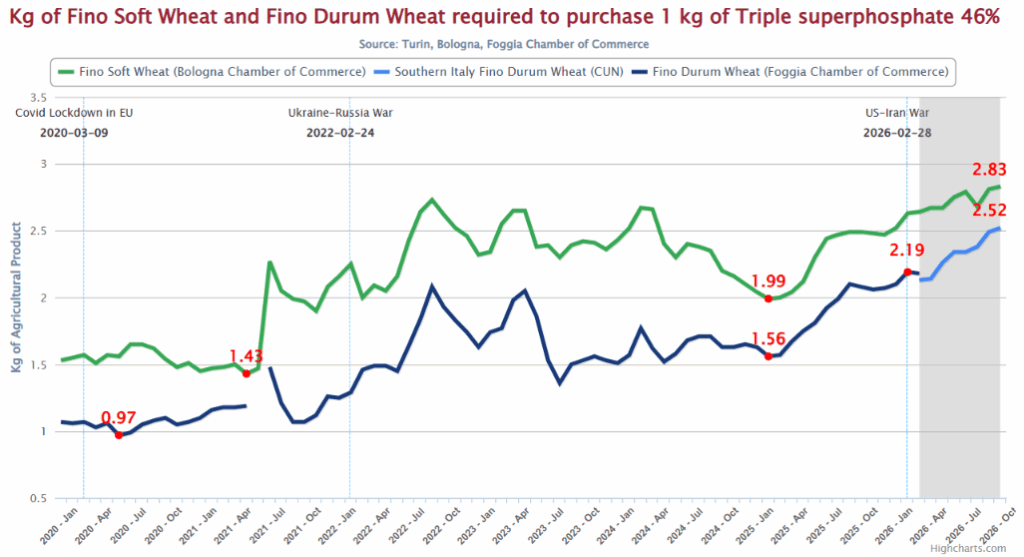
How much does the price increase weigh on crop revenues? The price ratio between Fertilizer and cereals has increased. It now takes approximately 2.73 kg of Corn or 2.83 kg of Soft Wheat to purchase 1 kg of triple superphosphate. Rising Fertilizer prices mean farmers must sell more grain to pay for the same amount of Fertilizer.

TESEO.clal.it – kg of Wheat required to purchase 1 kg of Triple superphosphate

EU pork: Supply grows, increasing pressure on prices
16 October 2026

by Marika De Vincenzi

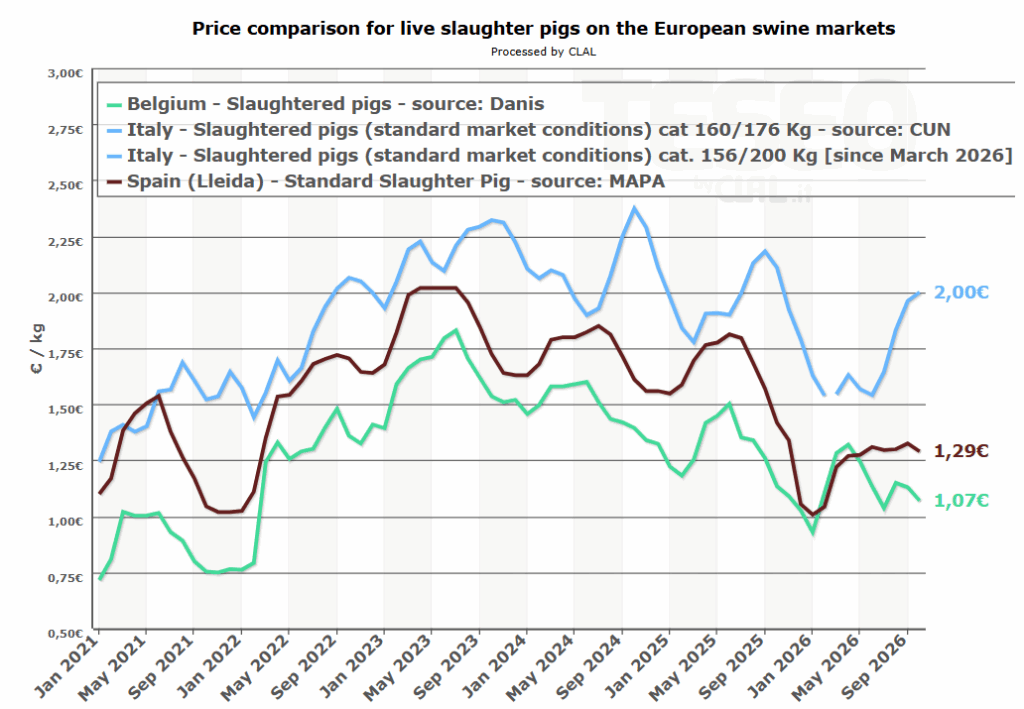
Teseo.clal.it – EU Slaughter Pig Prices

EU pork production continues to grow: following a 3.6% increase in 2025, production rose by a further 1.4% in the first seven months of 2026 compared with the same period of the previous year.

In contrast, extra-EU pork exports declined by 3.4% in volume and 17.6% in value.

The EU has a self-sufficiency rate of 115%, with significant differences between countries: from Denmark (576.5%) and Spain (163.9%) to Italy (58.1%).

The increased availability of pork, combined with weaker export opportunities, could intensify competition within the European market.

The price comparison between Italy, Spain and Belgium (see chart) highlights significant differences between national markets, partly reflecting their different production systems.

Against a backdrop of growing European pork supply, the Italian pork supply chain’s ability to capitalise on its distinctive production characteristics – including in export markets and higher-value market segments – will be crucial to maintaining its price premium over other European countries.

Outlook for the Coming Season: Corn, Wheat and Soybeans
13 October 2026

by Elisa Donegatti

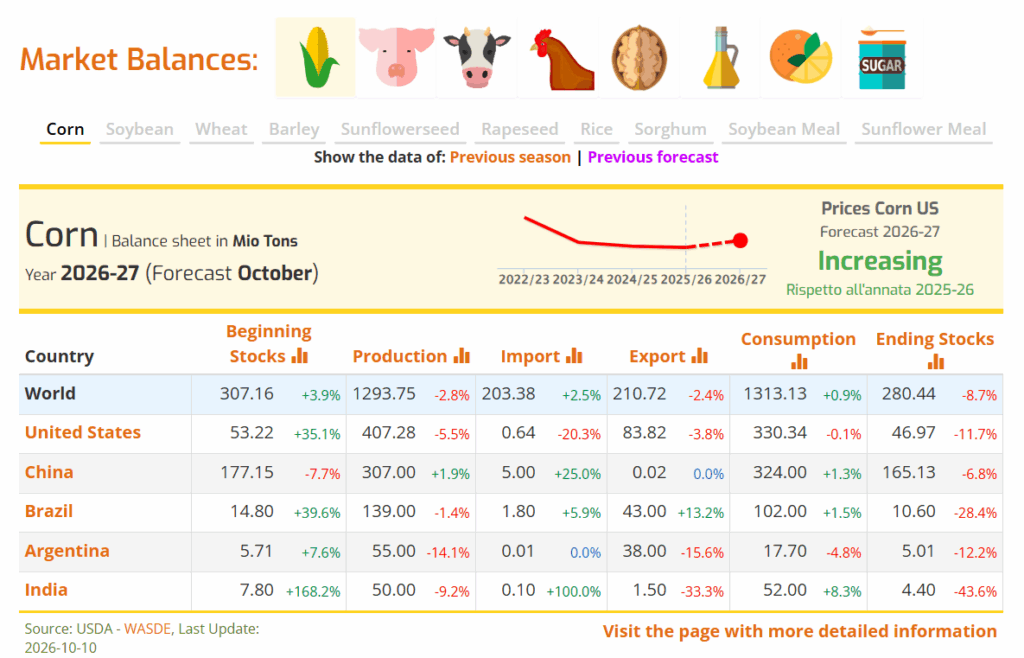
The balance between supply and demand is a key tool for understanding a market. TESEO’s homepage provides monthly updated balances for many cereals, oilseeds and some derived products. Here are the key updates from the latest outlook for the 2026/27 season:

🌽 Corn: Despite improved estimates for US availability, production is expected to decline compared with the 2025/26 season, both in the United States and globally, putting pressure on stocks. EU production is forecast to fall by 15.6%.

🌾 Wheat: The outlook for global stocks and exports is worsening, with both expected to decline compared with the previous season. Russia is expected to record the largest drop in exports, while Canada and Australia remain key suppliers on the international market.

🫘 Soybeans: Production and exports are expected to increase, driven mainly by the United States, while stocks are set to remain stable. Brazilian production is also forecast to grow by 3%. Its progress will be important to monitor in assessing South American supply and trade flows.

Explore the balances for Soybean Meal, Barley, Sunflower Seed, Rapeseed, Rice, Sorghum and Sunflower Meal on TESEO.clal.it >