















































































by Marika De Vincenzi
The Philippine pork market is facing a challenging period, characterized by declining farmgate prices, negative profitability for many farmers and rising cold storage inventories. According to the Department of Agriculture, growing imports are intensifying competition for domestic producers.
To support local farmers, the Philippine government has launched a safeguard investigation, notified to the World Trade Organization (WTO) on October 21, and is considering higher tariffs and possible import restrictions. No final measures have been adopted yet.
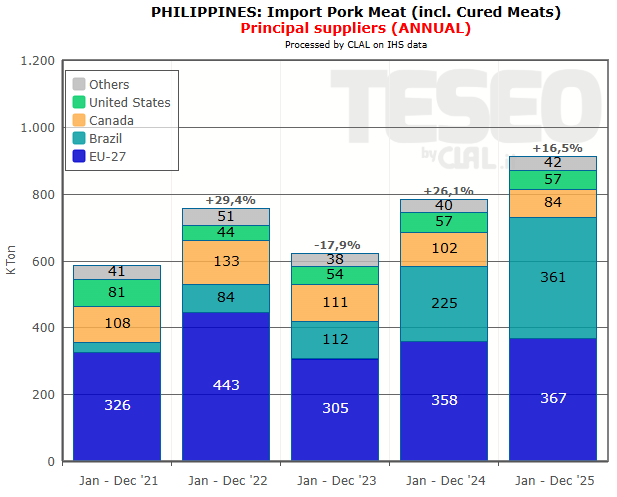
According to CLAL analysis, in 2025 the Philippines imported 911,000 tonnes of pork and processed pork products (+16.5% year-on-year), including 367,000 tonnes from the EU (40% of the total), broadly in line with Brazil (361,000 tonnes).
The main imported categories were fresh, chilled and frozen pork (463,000 tonnes) and pork offal (301,000 tonnes). Major European suppliers included Denmark, Spain, The Netherlands and France.
The consequences could also indirectly affect Italy: in 2025, Denmark, Spain, the Netherlands and France supplied a combined 581,000 tonnes of pork to Italy, accounting for approximately 47% of total Italian pork imports.
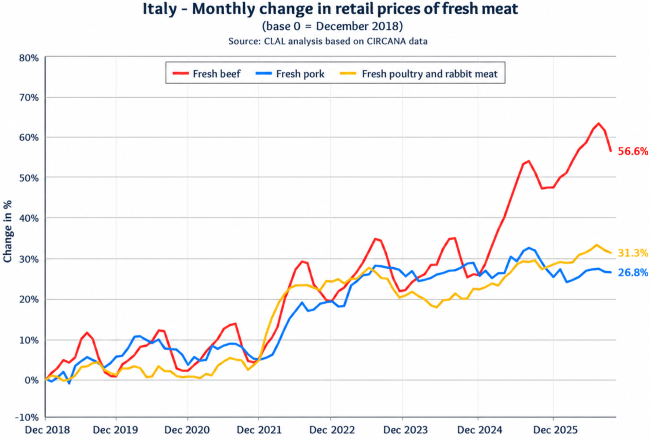
Potential Philippine import restrictions could redirect part of the European pork supply towards other markets, including Italy, increasing downward pressure on pork prices. This could have negative repercussions for the Italian pork market, even if indirectly.