












































































By Marika De Vincenzi
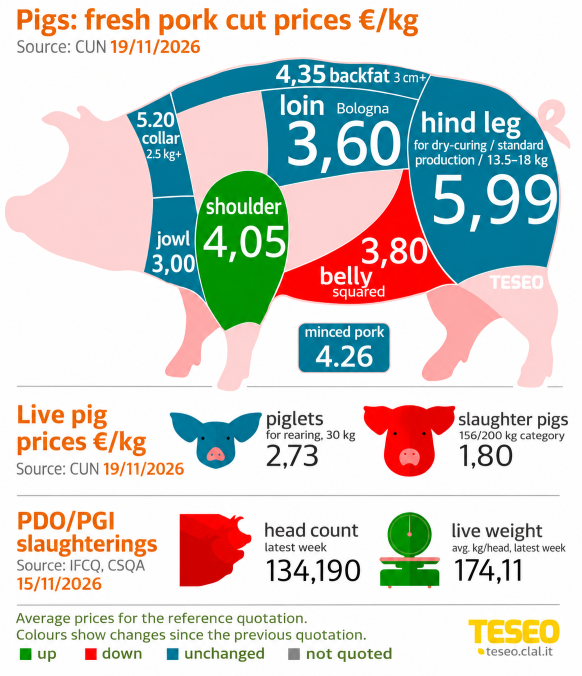
“The European pig sector is facing a difficult situation, with more pigs than the market can absorb. Consumption remains subdued, even though pork provides high-quality protein and is more competitively priced than beef, which has become significantly more expensive, and poultry, whose prices have risen in recent months. Yet there is a campaign against cured meats in particular on health grounds, which is dampening consumption of some products.”
Lorenzo Levoni, CEO of Modena-based Alcar Uno, describes a challenging situation for the pork supply chain, compounded by rising energy costs, from fuel to electricity, as well as higher logistics and transport costs. Prices have also risen for the agricultural commodities that form the basis of feed rations for pigs and other livestock.
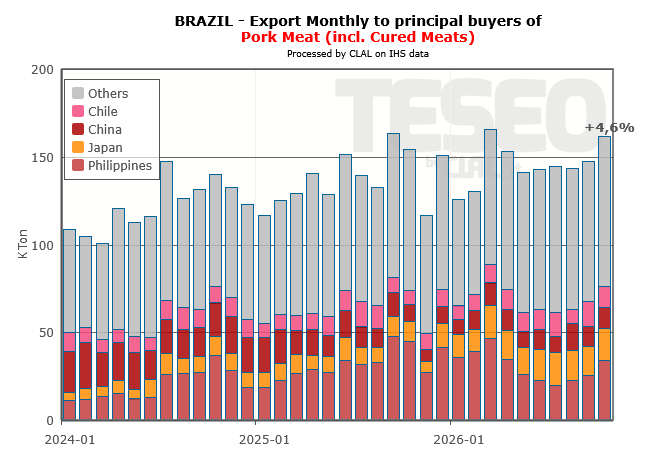
“Exports have also slowed as African swine fever shows little sign of receding in some parts of Europe. With less EU production reaching international markets, there is less upward pressure on prices,” Levoni explains. “The ASF situation in the Po Valley still seems far from improving, although some municipalities in the province of Pavia and in Piedmont are no longer in restricted zones. Much remains to be done, and securing regionalisation to allow exports looks quite difficult.”
There may be some room for improvement if pork production falls. “The downturn in the fresh pork market has prompted farmers to limit their losses by slaughtering more sows. This is expected to reduce pig production as early as next spring,” Levoni says.
“Italy raises heavy pigs and therefore has a longer production cycle. Its sow herd also appears to have shrunk less than elsewhere. This suggests that pig prices could recover more slowly in Italy than in the rest of Europe, with prices likely to start rising in the second quarter of 2027.”
Overall, however, climate change and rising production costs throughout the supply chain could also push up consumer prices. How this will affect consumption remains to be seen.