









































































By Marika De Vincenzi

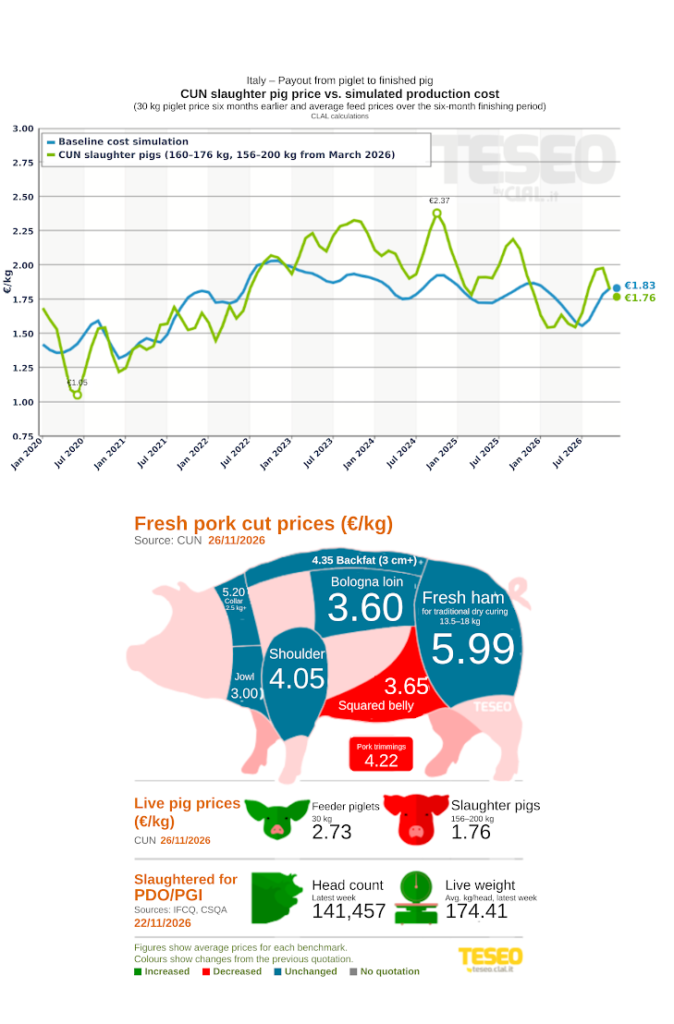
“The pig market is far from healthy. We’re at a point where CUN prices are just covering production costs. I think we should convene a supply chain roundtable, initially involving at least the northern Italian regions, where pig production is concentrated, and bringing in the Ministry of Agriculture (Masaf) at a later stage.”
That is the view of Antenore Cervi, national coordinator for the pig sector at Cia-Agricoltori Italiani. The aim is to agree on strategies to promote Italian pork and high-quality PDO cured meats at a particularly difficult time for the market.
“We’re worried,” Cervi acknowledges. “2026 has been a difficult year. Producers faced a downturn in the opening months, followed by a few weeks of recovery, and prices have been falling again since October. We could face a wave of farm closures because farm margins are shrinking dramatically. Passing higher costs on to farmers is certainly no way for this supply chain to create value.”
One of the main factors weighing on the market is the presence of African swine fever (ASF) in Spain. It has diverted Spanish pork from Asia and other non-EU markets to Europe, particularly Italy, where it is being sold at much more competitive prices. “ASF remains an unpredictable threat in Italy too,” Cervi notes. “Compensation for farms affected directly or indirectly has been stalled since 2024. If the disease were to reach areas with a high concentration of pig farms, the consequences would be severe.”
The outlook is bleak. “The thought of the pig market staying this depressed for several more weeks is worrying.” Cervi rules out cutting the number of pigs raised in Italy in an effort to push prices back up, “partly because if we lose ground in domestic production, we risk making even more room for imports, especially fresh pork.” That would also erode the margins that PDO dry-cured hams have managed to sustain this year, albeit with difficulty.
“We need a supply chain roundtable, also to counter the misinformation being spread by the media, which tarnishes the reputation of a livestock sector that, alongside poultry farming, has been among those investing the most in biosecurity,” Cervi warns.